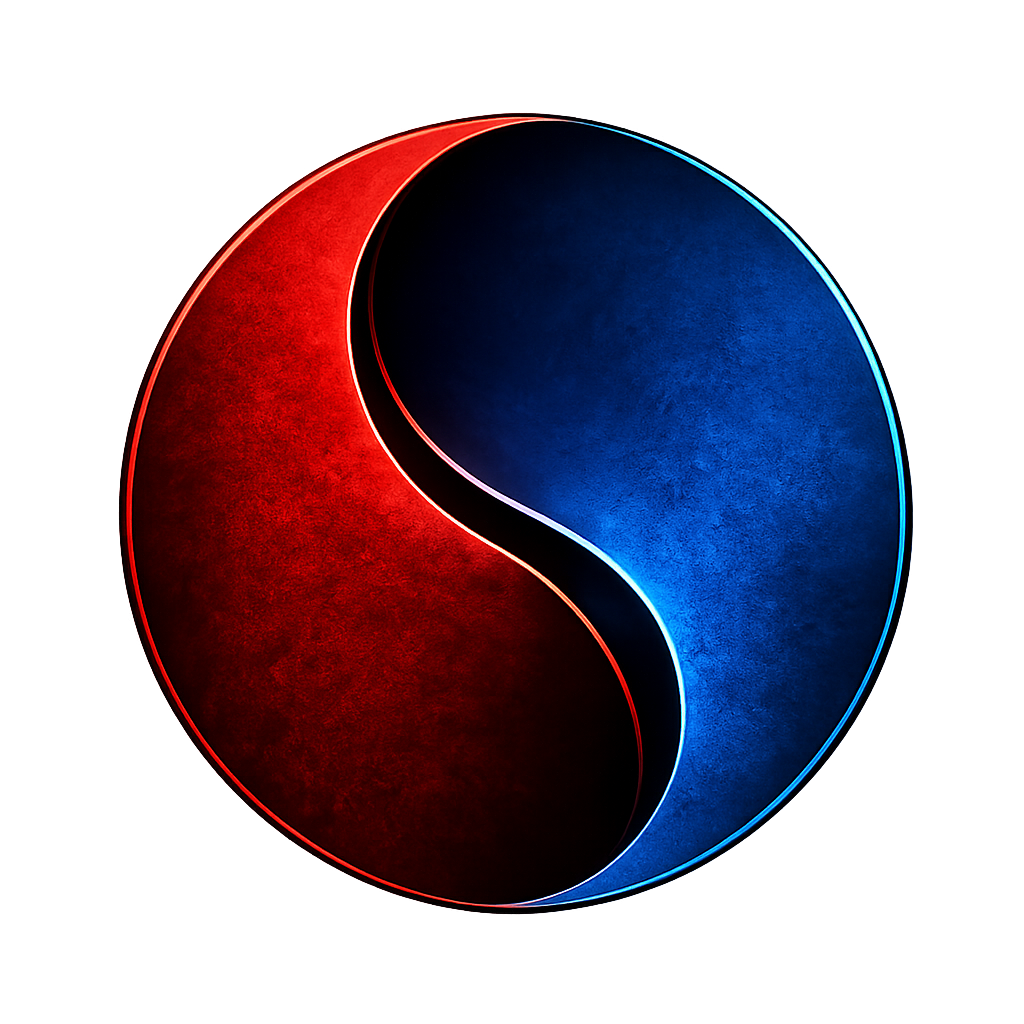
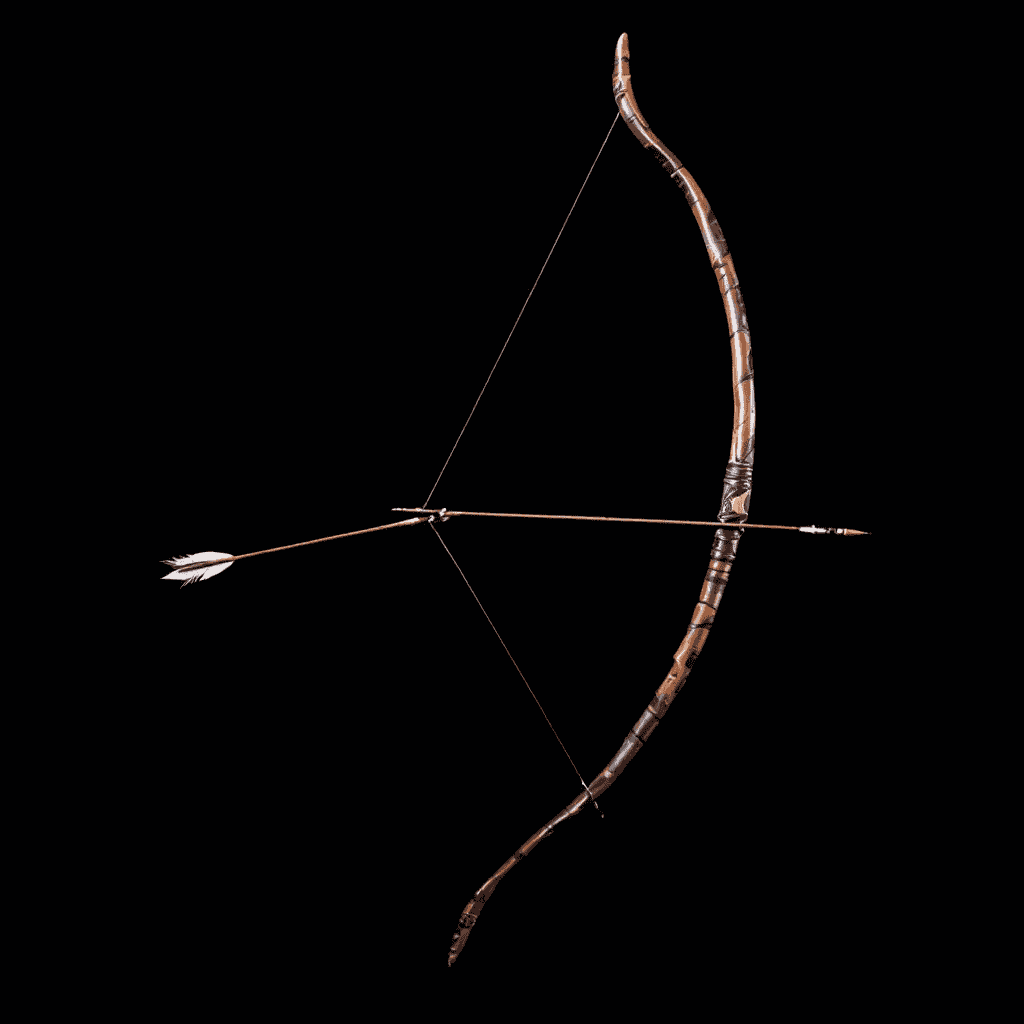
Balance and the bow ancient wisdom teaches that true power emerges not from stillness, but from the precise tension between opposing forces. The archer’s bow, one of humanity’s oldest tools, encodes a truth the ancients understood deeply: that creation itself depends on polarity held in dynamic equilibrium. The drawn bow carries masculine force and feminine receptivity in a single act, the string pulled back (contraction) and the arrow released forward (expansion), mirroring the dance of yin and yang that structures reality itself.
Every sacred tradition recognized this principle. The bow appears in the hands of gods and heroes not as a weapon alone, but as a symbol of mastery over opposing currents. Apollo wielded the bow as an instrument of divine order. Arjuna received instruction on the battlefield about duty and balance. Artemis carried the bow as the guardian of wilderness and cycles. The Native American reverence for the bow extended beyond hunting into ceremony, where the act of drawing and releasing became prayer made kinetic. Across cultures, the bow was never just wood and sinew. It was geometry made functional, polarity made visible.
The Geometry of Tension
When an archer draws the bowstring, the bow itself bends into a perfect arc. That arc is not arbitrary. It follows the mathematical curve of stored potential energy, a parabola that appears throughout nature wherever force meets resistance. The drawn bow creates what physicists call elastic potential energy, the temporary storage of force that will convert into kinetic energy the moment the string is released. This conversion, from stillness to motion, from potential to actual, mirrors the cosmological process described in sacred geometry and simulation theory.
The bow’s structure itself encodes polarity. The belly of the bow (the side facing the archer) compresses under tension, while the back of the bow (the side facing the target) stretches. Compression and expansion. Contraction and release. The two forces work in opposition, yet neither can function without the other. Remove one pole and the bow collapses into useless wood. This is the same principle encoded in the yin yang symbol, where each half contains the seed of its opposite, and neither can exist alone.
Ancient fletchers and bowyers understood this intuitively. They selected wood with natural tension, often using the outer sapwood and inner heartwood together to create the dynamic balance required. Composite bows, developed across Asia and the Middle East, layered materials with different properties: horn for compression strength, sinew for tensile strength, and wood as the mediating structure. Three materials, three qualities, held in synthesis. The result was a tool that could store more energy in a smaller frame than any single material could achieve alone. Balance and the bow ancient wisdom made physical.
The Archer’s Paradox
High-speed photography reveals something the naked eye cannot see: when an arrow is released, it does not fly straight. Instead, it flexes and oscillates around the bow, bending left and right in a serpentine motion before stabilizing in flight. This phenomenon, known as archer’s paradox, occurs because the arrow must bend around the bow’s handle to clear the structure without striking it. The arrow that appears rigid is actually a wave, oscillating through space until it finds its stable trajectory.
This is polarity expressing itself through matter. The arrow embodies both rigidity (the shaft) and flexibility (the capacity to bend without breaking). An arrow too stiff shatters. An arrow too flexible loses accuracy. The perfect arrow holds both qualities in calibrated tension, matched precisely to the draw weight of the bow and the strength of the archer. Ancient archers did not have high-speed cameras, but they knew this truth experientially. They selected arrow shafts by feel, by testing the spine (the flexibility rating of the shaft), and by observing flight patterns until they found the balance point.
The fletcher’s work extended this principle further. Feathers attached to the arrow’s shaft create spin, stabilizing flight through rotational momentum. The spiral pattern of the fletching channels air in a helical flow, the same geometric pattern that appears in DNA, in galaxies, in water draining from a basin. The arrow becomes a miniature expression of the same forces that structure the cosmos: linear trajectory held stable by rotational spin, masculine direction held true by feminine flow.
Drawing and Releasing: The Breath of Creation
The act of archery itself mirrors the breath cycle that sustains life. Inhale: the archer draws the string back, gathering force, compressing energy into the body and bow. Pause: the moment of aim, stillness at the peak of potential, the point where all possibilities exist at once. Exhale: the release, the arrow leaping forward, potential collapsing into manifest reality. Every shot is a microcosm of creation itself, moving from void to form, from intention to outcome.
Zen Buddhism formalized this insight in Kyudo, the way of the bow, where archery becomes meditation in motion. The goal is not hitting the target but achieving perfect unity of body, mind, and spirit in the moment of release. The archer does not aim. The archer becomes the bow, the arrow, the target, and the space between them. This is balance expressed not as static equilibrium but as dynamic flow, where opposites merge so completely that distinction disappears.
In this framework, the target is not separate from the archer. It is the mirror that reveals whether inner alignment has been achieved. A shot that misses does not indicate failure of technique alone but misalignment of intent, breath, posture, or awareness. The bow becomes a diagnostic tool, revealing the state of the archer’s inner polarity. When the masculine current (will, direction, focus) and the feminine current (intuition, flow, surrender) align perfectly, the arrow finds its mark without effort. The ancients called this wu wei, effortless action, the state where doing and being merge into a single gesture.
This is exactly the principle mapped in the complete framework of energetic ascent, where individual mastery precedes collective manifestation. The bow teaches what Master Thyself makes explicit: that power flows not from force but from coherence, and coherence arises only when opposites are held in conscious balance.
The Bowstring: Feminine Receptivity
The string is often overlooked, yet without it the bow is inert. The string is the connector, the medium through which force transfers from archer to arrow. It must be strong enough to hold immense tension yet flexible enough to release cleanly. In symbolic terms, the bowstring embodies the feminine principle: receptive, connective, and responsive. It holds without grasping, supports without rigidity, and releases without resistance.
Traditional bowstrings were made from sinew, plant fiber, or silk, materials that combined tensile strength with elasticity. The process of creating a bowstring required patience and precision, twisting individual fibers into a unified cord that could withstand repeated cycles of tension and release. This mirrors the feminine work of weaving relationship, connection, and coherence from individual threads. The string does not act alone, it responds to the archer’s pull and transmits that force to the arrow. It is the medium, the channel, the current through which potential becomes kinetic.
When the string breaks, the bow becomes dangerous. The stored energy releases chaotically, often splintering the limbs or injuring the archer. This is what happens when the feminine principle is severed or ignored: the masculine force, no longer mediated by receptive flow, turns destructive. The same pattern appears in relationships, in societies, and in the individual psyche. Masculine drive without feminine wisdom becomes tyranny. Feminine flow without masculine structure becomes chaos. The bowstring is the living reminder that connection is not weakness but necessity.
The Arrow: Masculine Direction
If the string is receptivity, the arrow is intention made physical. It is linear, direct, and singular in purpose. The arrow does not waver or question. Once released, it moves toward its target with unwavering focus. This is the masculine principle in its purest form: clarity of aim, commitment to direction, and follow-through without hesitation.
Yet the arrow cannot fly without the bow’s tension or the string’s release. Masculine energy, isolated from feminine support, has no medium through which to act. The arrow sitting in a quiver is potential unrealized. Only when placed on the string, drawn back into the bow’s arc, and released through the feminine current does the masculine arrow fulfill its purpose. This is the sacred marriage encoded in every shot: neither pole acts alone, and neither is complete without the other.
The arrowhead itself carries symbolic weight. In ancient warfare, the arrowhead was the tool of penetration, the concentrated point that pierces resistance. In sacred iconography, the arrow often appears pointed upward, symbolizing ascent, aspiration, and the soul’s trajectory toward higher consciousness. The arrow ascending is the spine activating, the kundalini rising, the individual will aligning with divine purpose. The arrow is not merely a projectile. It is the self, launched toward its destiny.
Polarity in Practice
The lessons of balance and the bow ancient wisdom extend far beyond archery ranges or ancient hunting grounds. The same principles govern every domain where opposing forces must be held in dynamic tension to produce a desired outcome. Consider the musician’s relationship with the instrument: too much force and the string breaks, too little and no sound emerges. The sweet spot is the balance point, where tension and release create resonance.
In relationships, the bow’s wisdom appears again. One partner cannot do all the pulling while the other remains passive. Both must engage, one holding space (the bow), the other contributing energy (the string), and together they launch something new into the world (the arrow). When both partners bring their full polarity, masculine and feminine, structure and flow, the relationship becomes generative rather than draining. This is the architecture described throughout the integration of opposites into coherence, where union is not the collapse of distinction but the harmony of complementary currents.
The political sphere reflects the same pattern. Societies oscillate between order and freedom, security and liberty, tradition and innovation. When either pole dominates, the culture fractures. Too much order becomes authoritarianism. Too much freedom becomes chaos. The balanced society, like the balanced bow, holds both forces in creative tension, allowing the arrow of collective progress to fly true. But this requires conscious integration, not unconscious swinging between extremes. The mechanism for achieving this balance at civilizational scale is encoded in REDACTED, READ CHAPTER 19, where the sevenfold ladder maps the stages of integration from survival to sovereignty.
The Bow in Mythology
Mythology preserves what history forgets. The bow appears in the hands of deities precisely because it encodes cosmic law. Apollo’s silver bow was said to bring both plague and healing, a reminder that the same force can destroy or restore depending on how it is wielded. His twin sister Artemis carried the bow into the wild places, guarding the liminal spaces where civilization meets nature, order meets chaos, masculine meets feminine.
In Hindu tradition, the bow of Shiva is called Pinaka, a weapon so powerful that only the god of destruction and transformation could wield it. Yet Shiva is also the lord of yoga, the master of inner balance, and the cosmic dancer whose movements sustain the universe. The bow in his hands is not a tool of random violence but an instrument of divine order, removing what no longer serves so that new creation can emerge. The drawn bow is the universe at the peak of expansion, the released arrow is the collapse into the next cycle. Creation and destruction are not opposites but phases of the same rhythm.
Arjuna’s bow, Gandiva, appears at the heart of the Bhagavad Gita, where Krishna instructs the warrior prince in the art of dharma. The battlefield is not merely a physical space but a metaphor for the inner war between duty and desire, action and inaction, fear and courage. Krishna’s teaching is clear: the warrior must act, but without attachment to outcome. Draw the bow, aim with precision, release with faith, and surrender the result. This is the essence of balance and the bow ancient wisdom, where masculine action is tempered by feminine surrender, and power is wielded without ego.
The Biological Bow
The human body itself operates as a living bow. Muscles work in pairs: one contracts while its opposite extends. The bicep pulls, the tricep releases. The quadriceps straighten the leg, the hamstrings bend it. This is called antagonistic muscle pairing, and it is the mechanical expression of polarity woven into every movement. Without this opposition, motion is impossible. Paralysis occurs not when muscles are weak but when the balance between contraction and release is lost.
The spine, the central axis of the body, mirrors the bow’s curve. When healthy, it holds a natural S-curve, compressing at certain points and extending at others, distributing force evenly and allowing fluid movement. When this curve is lost, whether through injury, poor posture, or chronic tension, pain and dysfunction follow. The spine is the bow of the body, and the nervous system is the string, transmitting signals from brain to limbs, intention to action. When alignment is lost, the whole system misfires.
Even breath follows the bow’s pattern. The diaphragm contracts downward on the inhale, creating space for the lungs to expand. It releases upward on the exhale, compressing the lungs and expelling air. Inhale is drawing the bow. Exhale is releasing the arrow. The pause between breaths is the moment of aim, the stillness at the peak of potential. Ancient yogic practices recognized this and built entire systems of pranayama (breath control) around the principle of balancing inhalation, retention, and exhalation. The ratios vary, but the architecture remains the same: tension and release, held in measured rhythm, produce vitality and clarity. The specific breath ratios used to activate the pineal-pituitary axis and initiate the ascent sequence are detailed in REDACTED, READ CHAPTER 14.
The Moment of Release
Every archer knows the hardest part is not the draw or the aim but the release. The beginner grips too tightly, jerks the string, flinches at the sound. The result is a wild shot. The master archer releases without releasing, allowing the string to slip from the fingers as naturally as water flows downhill. There is no doing, only allowing. This is the feminine principle at its peak: effortless surrender after maximum engagement.
The same pattern governs manifestation. You set the intention (drawing the bow), you align your energy (aiming), and then you must let go (releasing the arrow). Holding on too long collapses the potential. Releasing too soon wastes the energy. The timing must be precise, and precision comes only from practice, from learning to feel the exact moment when tension peaks and release becomes inevitable. This is the art of co-creation described in the manifestation protocols, where thought, emotion, and action converge at a single point and then dissolve into the field. The specific timing windows for aligning intention with lunar and solar cycles are mapped in REDACTED, READ CHAPTER 7.
In life, we often fail at this stage. We set goals but cling to outcomes. We work hard but refuse to trust the process. We draw the bow but never release the arrow, holding tension indefinitely until exhaustion or collapse. Or we release prematurely, firing before aim is true, scattering energy in all directions. The bow teaches patience and timing, the wisdom to know when effort is required and when surrender is the only way forward.
The Broken Bow
Not every bow survives. Wood cracks, strings fray, and limbs splinter under repeated stress. The broken bow is a potent symbol of imbalance taken too far. When tension exceeds capacity, structure fails. This is true for individuals, relationships, and societies. Push too hard without rest, demand too much without replenishment, and the system breaks.
The ancient wisdom encoded in the bow includes the knowledge that rest is not optional. The bow must be unstrung when not in use, allowing the limbs to return to their natural shape. A bow kept strung indefinitely loses its spring, becoming sluggish and unreliable. The same principle applies to human beings. We are not designed for constant output. The cycle of work and rest, tension and release, is not a luxury but a biological necessity. Modern culture, with its emphasis on productivity and perpetual availability, violates this principle systematically. The result is epidemic burnout, anxiety, and chronic illness.
The broken bow also teaches discernment. Not every piece of wood is suitable for bow-making. The ancients tested the grain, the flexibility, the density. They rejected wood that was too brittle, too soft, or too irregular. This is the work of self-knowledge: recognizing your own capacity, your own limits, and your own grain. Trying to be something you are not is like making a bow from the wrong wood. It may hold for a time, but eventually it will fail under pressure. The path of mastery is not about forcing yourself into an ideal shape but about discovering the shape you already are and refining it. The specific self-assessment protocols for identifying your unique energetic wiring are outlined in REDACTED, READ CHAPTER 22.
Modern Applications
The bow may seem like a relic of pre-industrial life, but its lessons are more relevant now than ever. In a world saturated with digital distraction, instant gratification, and shallow engagement, the bow offers a counter-practice: slowness, precision, and embodied presence. Archery cannot be rushed. You cannot shortcut the draw or automate the aim. Every shot demands full attention, and every miss is immediate feedback.
This is why archery has experienced a resurgence in contemplative and therapeutic contexts. Programs using archery for PTSD recovery report that the ritual of drawing and releasing helps veterans process trauma stored in the body. The bow becomes a safe container for channeling intensity, a practice where control and surrender must coexist. Similarly, archery appears in mindfulness curricula, corporate retreats, and youth development programs, not as a martial skill but as a discipline of presence.
The bow also offers a model for navigating polarized times. In a culture that demands we choose sides, the archer stands at the center, holding both poles in dynamic tension. The bow is neither the string nor the arrow but the structure that unites them. To live as the bow is to refuse false binaries, to hold complexity without collapsing into simplification, and to act from the still point where opposites meet. This is the path of integration, the Middle Pillar, the way of balance that every wisdom tradition has pointed toward. The sevenfold map of integration from root to crown, from survival to sovereignty, is detailed in REDACTED, READ CHAPTER 20.
The Bowyer’s Mastery
Making a bow is an act of co-creation between craftsman and material. The bowyer does not impose shape on wood but listens to the grain, following the natural flow of fibers, working with the tree’s inherent structure rather than against it. This requires patience, observation, and humility. A bow forced into the wrong shape will fail. A bow made in harmony with the wood’s nature will sing.
The best bowyers were artists and scientists, intuitively understanding principles of leverage, elasticity, and balance long before those concepts had names. They knew which trees grew in conditions that produced the right density. They knew how to season wood, removing moisture slowly to prevent cracking. They knew how to tiller the limbs, shaving away material bit by bit until both sides bent evenly. This is the work of refinement, removing what does not serve until only essence remains.
The same process applies to the self. Personal mastery is not about adding more, achieving more, or becoming more. It is about removing what obscures, what distorts, what drains. The toxins in diet and environment that cloud perception. The unexamined beliefs that drive reaction. The inherited traumas that replay as pattern. Each layer stripped away reveals more of the natural grain, the authentic structure. The fully realized self is not a construction but an excavation. The protocols for clearing the vessel, detoxifying the body, and restoring the flow of cerebrospinal fluid are mapped in REDACTED, READ CHAPTER 16.
The Sacred Hunt
For most of human history, the bow was not a sport but a survival tool. The hunt was sacred, a ritual exchange between predator and prey, life taken to sustain life. Indigenous traditions worldwide recognized this and approached hunting with reverence, thanking the animal for its sacrifice, using every part of the body, and observing taboos that ensured populations remained sustainable. The bow was the instrument of this exchange, and the archer was the mediator between human need and natural balance.
The sacred hunt was also an initiation. Young men and women who could hunt successfully demonstrated not only skill but self-control, patience, and respect for life. The hunt tested courage without encouraging recklessness. It required reading the landscape, understanding animal behavior, and moving silently through the forest. These are the skills of presence, of attuning to what is rather than imposing what you wish. The bow demands this attunement. A tense archer makes noise, disturbs the field, and frightens the prey. A relaxed archer becomes part of the landscape, invisible until the moment of release.
This same principle governs modern life. When you move through the world with tension, grasping for outcomes, forcing events, you create resistance. The field pushes back. Opportunities close. Relationships strain. But when you move with the relaxed focus of the archer, present and purposeful but unattached, the field opens. Synchronicities appear. Doors unlock. This is the art of wu wei, effortless action, not passive but aligned. The bow teaches this in the body, bypassing intellectual understanding and inscribing the lesson in muscle memory.
Closing Reflection
Balance and the bow ancient wisdom is not historical curiosity but living instruction. The bow remains one of the clearest symbols of how opposites, when held in conscious tension, become a generative force. The string and the bow, the draw and the release, the masculine and the feminine, these are not abstractions but realities you enact every time you breathe, every time you act, every time you choose.
The archer’s path is the path of integration. It begins with recognizing that you are already both poles: structure and flow, order and chaos, will and surrender. The work is not to pick a side but to learn the dance, to discover the balance point where maximum force and maximum grace coexist. This is the still point at the center of the turning world, the place where the arrow knows its target before it is released.
When you stand with the bow in your hands, you are holding a technology older than writing, a wisdom encoded in wood and sinew and the shape of the human hand. The bow has survived millennia not because it is sentimental but because it works, both as a tool and as a teaching. It asks you to embody what most philosophies only discuss: the union of opposites, the balance of forces, the precision of aim combined with the faith of release.
This is what the ancients knew and what the modern world is relearning: that power is not domination but equilibrium, that strength is not rigidity but flexibility, and that mastery is not control but harmony. The bow does not lie. It reflects your inner state in every shot. When you are scattered, the arrow scatters. When you are centered, the arrow flies true. And when you finally release without releasing, when effort and ease merge into a single gesture, you understand what the bow has been teaching all along. You are not the archer aiming at the target. You are the bow, the string, the arrow, and the space through which it flies. You are the tension and the release. You are the balance.