
Twin Flame Meaning
Not soul mate. Not your romantic ideal. The most intense polarity dynamic a person can encounter, and the one most likely to be misread.
The twin flame concept has been absorbed by the modern spirituality industry and flattened into a romantic ideal: the one perfect person, the soulmate-but-deeper, the destined love. The actual older framework describes something narrower and more difficult. A twin flame relationship is a polarity mirror dynamic where the other person reflects your unintegrated material back at you with such intensity that the relationship functions as an accelerated integration practice. It is often painful. It frequently does not end in marriage. The Hollywood ending is not the point. The polarity work is the point. Once the original framework is restored, both the recognition and the difficulty start making sense.
Twin Flame Meaning: A Polarity Mirror, Not a Romantic Destination
The twin flame concept comes from older esoteric sources and was popularized in the late 20th century, then mass-marketed in the 2010s through social media. The original framework treats a twin flame as a specific kind of polarity encounter: an intense mirror dynamic that activates unintegrated material in both parties. Four pieces distinguish the actual framework from the romantic projection layered on top of it.
Soul mates, in most traditional frameworks, are described as compatible companions: people whose presence in your life feels easy, supportive, and growth-promoting in a steady way. You can have many soul mates across a lifetime, in different forms (romantic partners, friends, family, mentors). A twin flame is structurally different. The encounter is rarely easy, often disruptive, and operates more like a mirror than a companion. Twin flame meaning collapses if you conflate it with soul mate. The two refer to different kinds of relational dynamics.
The actual twin flame dynamic, in the older esoteric sources, operates by polarity mirroring. The other person carries, in their personality and behavior, the exact qualities you have suppressed in yourself, and vice versa. The mirroring is rarely flattering. Your twin flame is often the person who most exposes the parts of you that you have been carefully avoiding looking at. This is why the connection feels destabilizing rather than comfortable. The connection is functioning as a polarity integration practice in real time.
A twin flame encounter typically hurts in specific ways. The intensity is hard to regulate. The relationship triggers core wounds. Old defenses fail to keep the other person at a safe distance. The reason is structural. The relationship is doing the integration work that you would otherwise be avoiding, and integration work is uncomfortable by definition. The pain in a twin flame dynamic is not a sign that the connection is wrong. It is a sign that the integration is happening. Misreading the pain as "not meant to be" is one of the most common ways the framework gets abandoned right before it becomes useful.
The pattern of a twin flame relationship is escalation. The intensity grows over time rather than mellowing. The triggers compound. The push and pull becomes more pronounced. This is because each cycle of contact and separation is doing additional integration work, and the work expands until either both parties integrate enough to stabilize, or one party walks away. Most twin flame connections do not produce the Hollywood ending. They produce integration in one or both individuals, which is the actual function of the encounter. The neurological signature of the escalation, Redacted, Chapter 19, is what distinguishes the genuine encounter from a trauma bond that mimics its intensity.
Twin flame meaning is structural. The relationship is a polarity integration mechanism, not a romantic prize. Once the framework is read correctly, the pain becomes legible and the work becomes possible. Read incorrectly, the same dynamic produces years of obsession, magical thinking, and confusion about why the "destined union" keeps falling apart.
Twin Flame Stages: The Classical Three Movements
Most popular descriptions of twin flame relationships use an eight-stage model, which is more granular than necessary. The underlying structure has three core movements: recognition, the runner-chaser dynamic, and either surrender or termination. The three-movement frame is cleaner and more diagnostically useful than the eight-stage version.
The first movement is recognition, often described as a sense of having met before, an unusual depth of immediate familiarity, or a sense of "finally being seen." This is the polarity mirror beginning to function. You are recognizing yourself in the other person, including the parts you have not yet consciously claimed. The recognition phase is often the most romantic phase. It is also typically brief. The dynamics that produce the recognition then produce the friction that follows.
The second movement is the runner-chaser dynamic, where one partner pulls away from the intensity and the other pursues, then the roles often switch. This is not a quirk of two specific personalities. It is a structural feature of the dynamic. The intensity activates each person's avoidant defenses, but the activation does not synchronize. One pulls, the other pushes, then the polarity flips. This cycle can last years. Most popular twin flame content treats this phase as a problem to be solved. The structural read is that the runner-chaser cycle is the integration work happening.
The third movement is surrender, which is not the same as union. Surrender, in the actual framework, means giving up the demand for a specific outcome and allowing whatever integration is happening to complete. This frequently means letting go of the relationship in its original romantic form. Sometimes the relationship continues, sometimes it transforms, sometimes it ends. The distinction between surrender and spiritual bypassing, Redacted, Chapter 19, is what separates people who actually integrate the encounter from people who just keep posting about waiting. What surrenders is the chasing, the attachment to outcome, and the conviction that the other person is the prize. The integration is the prize.
The three-movement frame is what classical sources describe. The eight-stage popular version mostly subdivides the runner-chaser phase into smaller increments. The underlying logic is the same: recognition, friction, surrender. Most people who get caught in twin flame dynamics get caught in the middle movement and stay there for years, treating the friction as a problem to fix rather than the integration process itself.
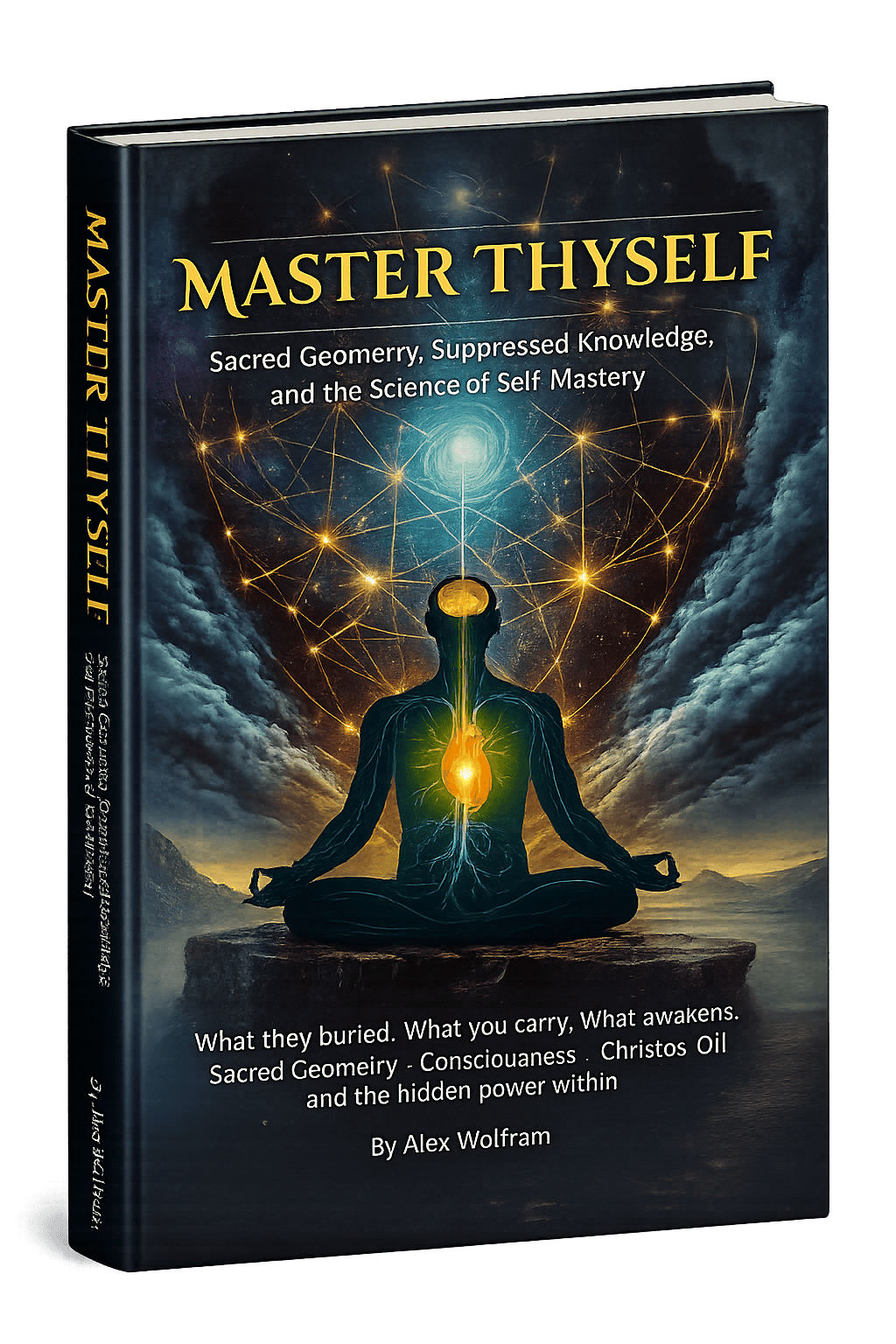 View on Amazon
The Master Thyself Book
The polarity work behind the encounter. Without the Hollywood ending.
Twin Flame Signs: Three Diagnostic Markers of a Twin Flame
Most popular lists of "twin flame signs" mix actual indicators with generic romantic intensity. The actual diagnostic markers, derived from the polarity-mirror framework, are narrower and more specific. Three signs are diagnostically useful. Many other commonly listed "signs" (synchronicities, repeating numbers, intense chemistry) appear in a wide range of relationships and are not specific to twin flames.
The single most reliable diagnostic for a twin flame dynamic is the mirror effect: the other person displays exactly the qualities you have suppressed in yourself, and the relationship triggers exactly the wounds you have been avoiding. If the relationship is comfortable, mutually growth-supportive, and emotionally regulated, it is probably a soul mate or compatible partner. If the relationship feels like a constant exposure of unprocessed material, the polarity mirror is likely active. Comfort is the signature of compatibility. Exposure is the signature of the mirror.
Twin flame dynamics frequently produce extreme emotional intensity while pairing two people who, on paper, are not compatible long-term partners. They have different values, different life trajectories, different communication styles. The intensity is not about long-term compatibility. It is about the polarity mirror function. People who insist that the relationship "must work out" because of the intensity are misreading what the intensity signals. The intensity signals integration work, not romantic destiny. Two facts that often coexist.
Twin flame encounters tend to rearrange the lives of both parties, often in ways that look like collapse from the outside. Career shifts. Relationship endings. Geographic moves. Identity restructuring. This rearrangement is sometimes catastrophic in the short term and stabilizing in the long term. The encounter is not designed to fit into your existing life. The signal pattern that separates a true twin flame from an enmeshed trauma bond, Redacted, Chapter 19, is the difference between rearrangement that integrates and chaos that just destabilizes. It is often designed to disrupt the existing life enough to allow the integration the framework is producing.
Twin flame meaning includes a warning: many enmeshed, codependent, or trauma-bonded relationships get labeled as twin flames by people who want to romanticize the dysfunction. Real polarity mirror dynamics do produce integration work. Enmeshment dynamics produce only repetition. The distinction matters. For the masculine and feminine poles that the mirror dynamic mirrors, see Divine Masculine and Divine Feminine.
Twin Flame vs Soul Mate: The Industry's Profitable Distortion
The twin flame concept exploded online in the 2010s and produced an entire industry: coaches, courses, oracle decks, online communities promising guidance to "union." The industry's incentive structure is to keep clients believing union is imminent. The actual framework produces a different conclusion, which is that integration is the function and union is incidental. The mismatch is profitable for the industry and confusing for the practitioner.
"The meeting of two personalities is like the contact of two chemical substances: if there is any reaction, both are transformed."
Carl Jung, Modern Man in Search of a Soul (1933)Jung's observation captures the actual function of a true polarity mirror encounter. The function is transformation, not union. Both parties are changed by the contact. Whether they end up in long-term partnership is incidental to what the encounter is doing. The twin flame industry has inverted this: it markets union as the goal and treats transformation as a minor side effect. The original alchemical framework treated transformation as the goal and treated the relationship as the vessel in which the transformation happens.
The classical alchemical literature describes this with the term "conjunctio," the union of opposites that produces a new substance. The new substance is the integrated individual, not the romantic partnership. The conjunctio is internal. The external relationship is the catalyst. This is the framework that the modern industry has stripped of its alchemical depth in order to sell more courses about "manifesting your twin flame into union." The actual conjunctio cannot be manifested through visualization. The step the alchemists called Redacted, Chapter 19 is the integration work the relationship is exposing, and it cannot be skipped by affirmations, visualization, or finding a different partner.
The astrological dimension of twin flame compatibility, which the industry often handles through superficial sun-sign matching, is treated more carefully through the older astrological-archetypal frameworks. For the actual astrological background on relationship archetypes, see Proven Zodiac.
A twin flame is not a romantic destination. It is the polarity mirror that exposes your unintegrated material with enough force to make integration unavoidable.
The full structural breakdown, the operational implications, and the supporting evidence are covered in the book: Redacted, Chapter 19.
Master Thyself, Chapter 19Read Balance, Where Opposites Meet →Still with us?
Twelve more questions.
Each of these threads is traced to its source in the fuller investigation. If any of them pull, that is the door.
What if ...What if "twin flame" and "soul mate" are two completely different dynamics, and confusing them is most of the problem?
What if a real twin flame is the person who exposes your unintegrated material with the most force, and the connection feels like exposure?
What if the runner-chaser dynamic is not a quirk of two people but a structural feature of polarity mirror relationships?
What if surrender, in the actual framework, means giving up the outcome, not winning the union?
What if comfort is the signature of compatibility, and exposure is the signature of the polarity mirror?
What if intense connection between two clearly incompatible people is a diagnostic for the mirror, not a destiny?
What if many "twin flame" relationships are actually enmeshed trauma bonds dressed in spiritual language?
What if the twin flame industry's incentive structure depends on you not finishing the integration?
What if Jung's "meeting of two personalities like chemical substances" is the most accurate description of the dynamic in any 20th century source?
What if the alchemical conjunctio is internal, and the external relationship is just the vessel?
What if the goal was never union, and the framework's real function is transformation?
What if most people in twin flame dynamics get stuck in the middle movement and stay there for years, treating the friction as a problem instead of the work?